
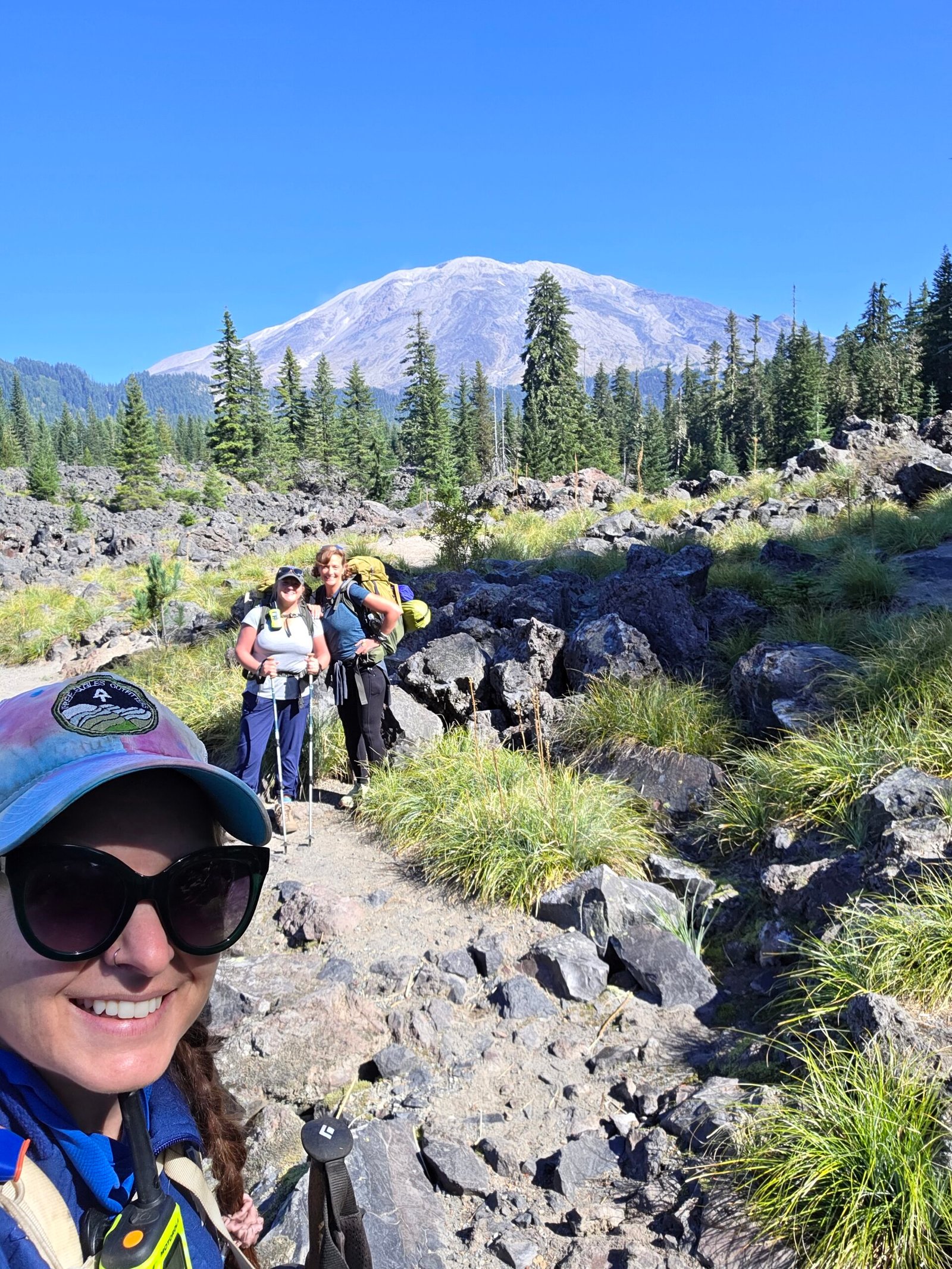
Guest Contributor Trish Schales
When I first started creating women-specific outdoor trips, one of my male best friends asked me, “Why? Why do women need their own trips? What’s different? Don’t women backpack the same way?”
He wasn’t the first person to ask those questions, and as a man who had never experienced life as a woman, I understood that he didn’t get it, and appreciated that he was curious and interested in “getting it”. At the time, I struggled to find the words to explain the difference in female-led outdoor spaces, so I relied on an anecdote that he’d witnessed himself.
An Anecdote
Back in 2018 when I was searching for my van-life van, he accompanied me to the dealership. Prior to the visit, I was in touch with the dealer via email. During the visit, I did the talking, I held the checkbook, and I made it clear it was MY purchase and we were not a couple.
And yet, when we sat down to negotiate, the dealer never once looked at me. Every question I asked went unanswered, and the dealer continued to speak only to my friend. I may as well have been invisible. (Side note: my friend called the dealer out on it, we walked away, and I found Big Poppa Frankenvan randomly on another lot.)
That was far from an isolated experience. I’ve been dismissed, talked over, blatantly ignored, and underestimated more times than I can count. Bike shops, outdoor retailers, job interviews, real estate; all similar experiences.
While I believe things are changing, women are still a minority in the outdoor industry. Too often, we’re assumed to be inexperienced, fragile, or naïve. Constantly having to prove your skills and knowledge is exhausting. And honestly? We’re just over it. No one wants to have a first-time wilderness experience and navigate through micro-agressions and condescension.
What’s Different in a Women-Centered Outdoor Community?
Emotional Comfort
There’s a certain comfort that comes from being among women that allows the freedom to simply show up as yourself. Of “just being”, knowing that you’re seen, heard, and it’s ok to not know things and to ask those uncomfortable questions without the fears of judgment, dismissal, and condescension.
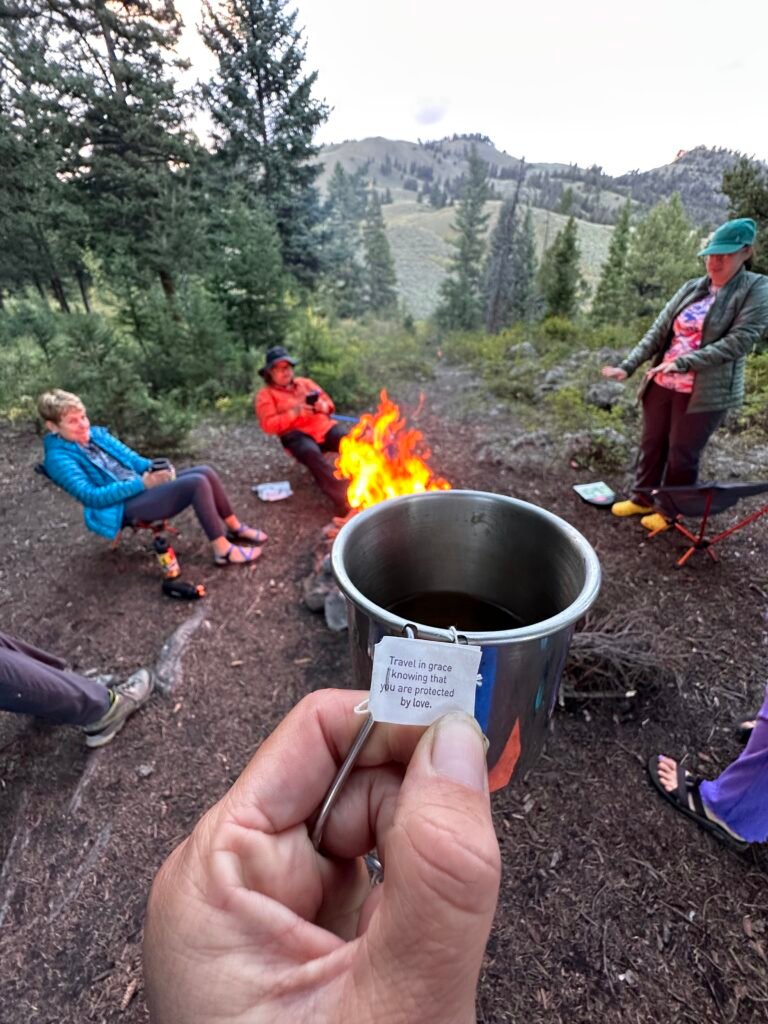
While we certainly do talk about biologically specific questions like “What do I do about my period while backpacking?” or “Will a bear come after me if I’m menstruating?” that’s only a small part of it. The real magic is in the emotional safety that’s created. We can ask how a piece of gear works without being told we have no business outside if we don’t already know all of the things. In women-led spaces, we cultivate empathy, understanding, patience, and acceptance that can be hard to find in mixed-gender environments.
Physical Comfort
Then there’s the physical comfort. Perhaps more accurately, the absence of discomfort. Nearly every woman I know has experienced unwanted attention, harassment, or catcalling. For many, even something as simple as learning to paddleboard in a co-ed group can feel intimidating or unsafe, and cause worry and concern about how to dress for the weather and activity while also attempting not to draw attention to oneself. And then they worry about it the entire lesson and miss out on the opportunity to be present. It’s impossible to fully learn something new when a background tab in the brain is on high alert for physical safety. It can be completely overwhelming, and women will often avoid placing themselves in the situation all together so they don’t have to deal with it.
Just to go on a simple jog in our own towns, we’re supposed to make sure we aren’t dressed to bring attention, carry weapons, know escape routes. If those are some of the preparations we have to make in crowded local places, wilderness experiences are even more daunting. There is a need to stay alert at all times and be primed for fight or flight. In women’s spaces, we don’t have to “mask.” There is an opportunity to let down your guard, be vulnerable, and be fully present and enjoy the experience and only worry about the bear- sans man.
These aren’t necessarily topics we discuss- these underlying scenarios are simply to demonstrate why there is a need for these spaces. I’ve never seen or experienced any gender-bashing and we don’t make voodoo dolls (although we have howled at the moon! And it was amazing). There is just a certain peace that exists when we don’t have to stay on high alert, project toughness, or carry that invisible layer of armor. We can breathe.
Shared Experience
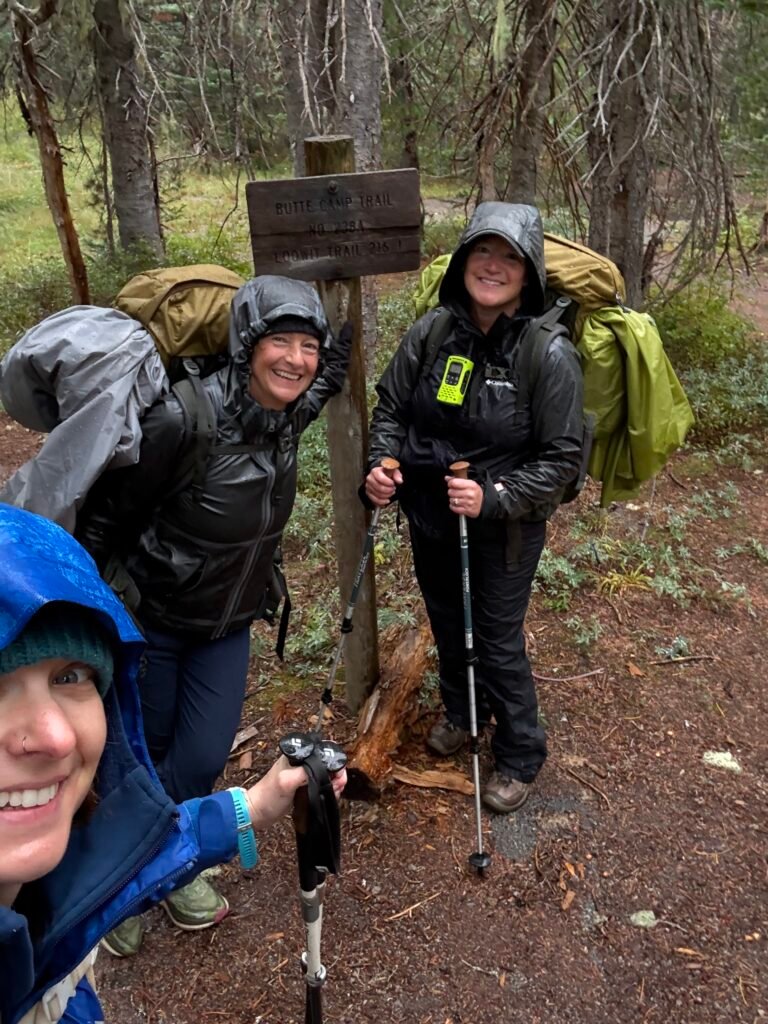
On women’s trips, there’s an unspoken (and often spoken) connection, a shared understanding of the many roles we juggle: mother, daughter, professional, caregiver, household manager, partner. We can freely discuss issues we all face without apology.
Although no two women will have the same story, there’s always overlap and resonance. There’s deep comfort in knowing we’re not alone. Health and hormonal struggles are so common, and yet we are made to feel like it’s just us and something is wrong with “me”.
In wild spaces, our individual struggles often come up. Wisdom is shared freely, and in the absence of the need to compete and fight to be heard, women have the opportunity to uplift and support each other. Barriers are dissolved, and shared dreams evolve into reality in the support of the community.
Joy & Laughter
All of the women-specific experiences I’ve been a part of have been some of the most purely joyful experiences. There is so much presence and laughter, the connection and happiness is pure and potent. I believe this is a side effect of physical and emotional safety- Maslow’s Hierarchy of needs and all, we are able to experience love and joy only after our physiological and safety needs are met.
How Are Female Guides Different?
Most of the female guides, SAR teammates, and outdoor professionals I know are strong, rugged, capable, and fearless. We’re skilled in logistics, risk management, and survival. We tough it out in brutal conditions and know how to put our heads down and take care of business in all circumstances.
And yet, there’s also a softness; a deeply intuitive, nurturing quality that threads through our leadership. It’s a quiet strength, not a loud one.
That emotional intelligence, that ability to connect and anticipate needs before they’re spoken, is truly special. Of course, emotional intelligence isn’t exclusive to female guides (and I’m grateful to have amazing male co-guides that lead with compassion). In general it is more prevalent in female-led outdoor communities.
The heart of a female-led community is a place of belonging. Together, we don’t just survive the wilderness, we belong and thrive in it.