

Winter trails across Washington, Oregon, Idaho, Montana and Wyoming freeze fast. A sunny day, a cold night and suddenly the whole trail turns to ice. Microspikes help you stay upright when that happens. They’re light, cheap and easy to use.
Here’s a simple guide written for real Northwest conditions.
Why Ice Turns Easy Trails Into Trouble
Packed snow turns slick after a few freeze-thaw cycles. Shaded spots stay icy all day. Waterfalls spray mist across the trail. Even popular routes get polished by boots.
Microspikes fix that by giving your shoes metal points that grip the ice. They’re not for steep climbing. They’re perfect for mellow winter walks, frozen trailheads and shoulder-season hikes.
You’ll notice the biggest difference on:
• Icy steps and switchbacks
• Frozen forest roads
• Waterfall trails with overspray
• Trail sections that see heavy foot traffic
Northwest Trails Where Microspikes Make a Big Difference
You don’t need them on every winter trail. But some spots across the Northwest turn icy every year.
Washington
Lake 22, Wallace Falls, Rattlesnake Ledge, Mt Spokane State Park
Oregon
Multnomah Falls, Silver Falls State Park, Smith Rock during cold snaps, Mt Hood foothills
Idaho
Bogus Basin trails, Ponderosa State Park, Farragut State Park
Montana
Hyalite Canyon, the M Trail in Missoula, lower Glacier NP trails
Wyoming
Grand Teton foothills, Snow King area, Sinks Canyon
If you see “packed snow, icy in spots” in a trail report, bring spikes.
Picking Spikes That Hold Up in NW Winter Slop
The Northwest is tough on gear. Cold, wet and muddy. Look for spikes that can handle it.
A good pair should be:
• Snug with a strong rubber harness
• Stainless steel to prevent rust
• Medium-sized chains for normal hiking
• Compatible with boots and trail shoes
Trusted picks: Kahtoola, Hillsound, Black Diamond.
Before buying, test how tight the harness feels. Loose spikes roll under your foot.
A Simple Way to Slip Them On Without Fighting the Rubber
Putting microspikes on is easy once you know the order.
- Sit on a rock or brace against a tree.
- Hook the toe of your boot into the front ring.
- Stretch the rubber up and over your heel.
- Make sure the chains sit flat and untwisted.
- Give your foot a quick stomp to settle them.
Tip: Put spikes on before the icy section. Not after you start sliding.
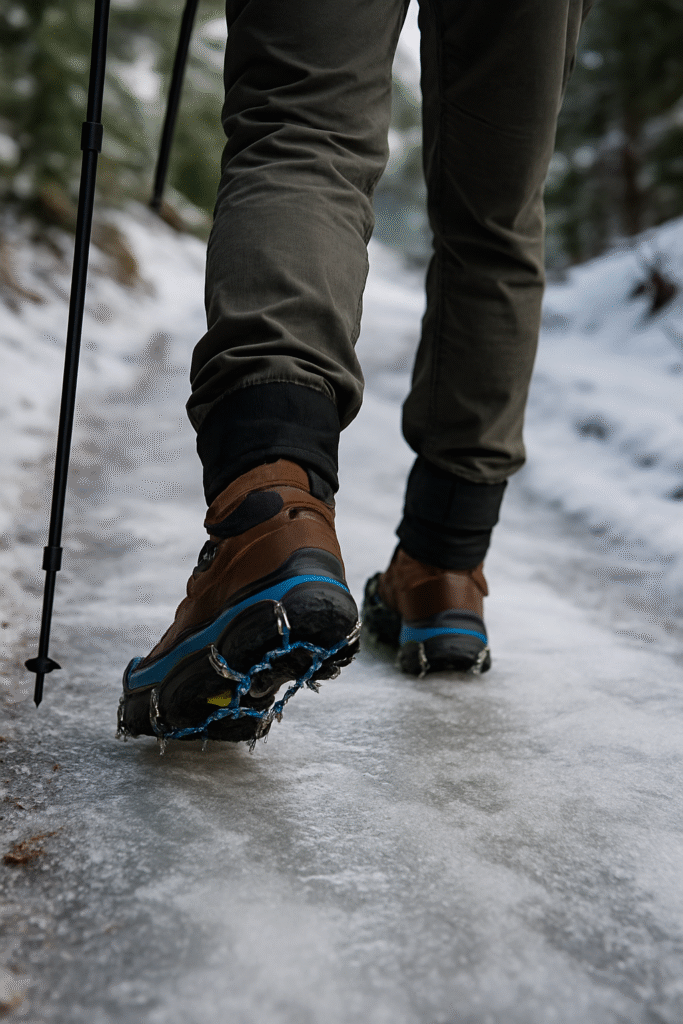
Walking Smart on Ice, Snow and Freeze-Thaw Slabs
Microspikes help, but technique still matters.
Keep your steps small.
Short steps give each spike better contact.
Stay balanced.
Keep your weight over your feet. No leaning forward.
Slow your downhills.
Let the spikes bite before you shift your full weight.
Avoid bare rock.
Spikes slip on rock and wear down fast.
Watch soft snow.
If you start sinking, switch to snowshoes.
Always check avalanche forecasts when near steeper terrain. Use:
• Northwest Avalanche Center (WA/OR)
• Idaho Panhandle & Sawtooth Avalanche Centers
• Gallatin & Missoula Avalanche Centers (MT)
• Bridger-Teton Avalanche Center (WY)
Small Gear Add-Ons That Make Winter Walks Even Better
These simple items make a big difference:
• Trekking poles with snow baskets
• Dry bag for storing wet spikes
• Warm gloves for taking spikes on and off
• Gaiters for keeping slush out
• Headlamp for short winter days
You don’t need much to stay safe. Just the basics.
Trails Across the Northwest That Are Perfect for Practicing
Choose mellow trails the first few times you use microspikes.
Washington: Twin Falls, Nisqually Vista (when icy)
Oregon: Mirror Lake, lower Timberline Trail segments
Idaho: Boise foothills after a freeze, Camas Prairie
Montana: Riverfront trails in Missoula or Bozeman after storms
Wyoming: Jackson town trails after freeze-thaw cycles
Practice on easy routes. Save bigger snow days for later.
The Takeaway
Microspikes are one of the best winter upgrades you can buy. They make icy Northwest trails safer, steadier and a lot more fun. Keep a pair in your pack all winter. You’ll use them more than you think.